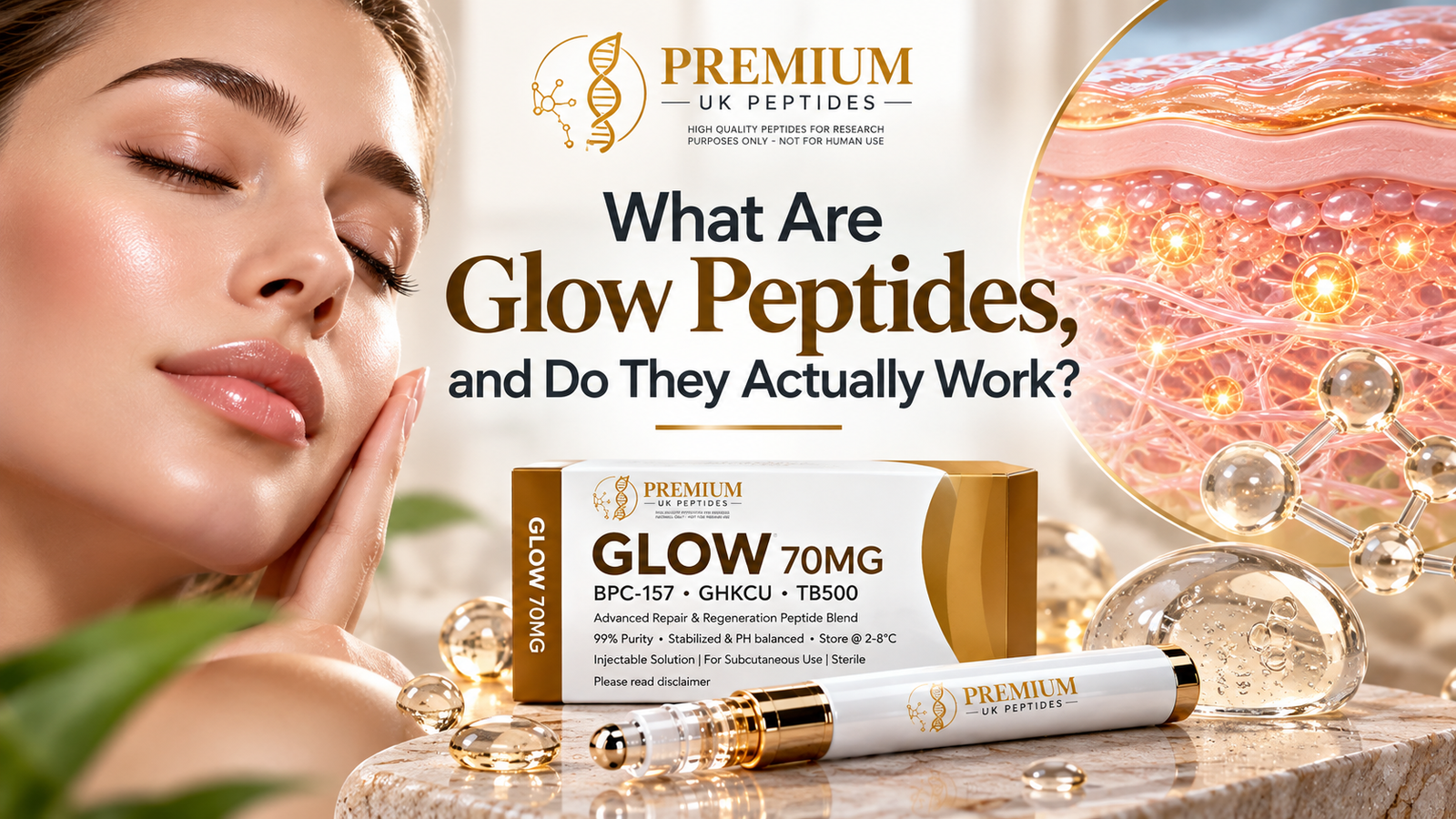
Quick answer: Glow peptides are short chains of amino acids formulated to support collagen production, strengthen the skin barrier, and improve radiance over time. Unlike instant-glow products that rely on light-reflecting particles, peptides work gradually by signaling skin cells to repair and renew themselves, making them a long-term investment in skin health rather than a quick fix.
Peptide-infused skincare has moved from dermatologist offices into everyday routines, and for good reason. These tiny protein fragments do a job that few ingredients can match: they communicate directly with skin cells, prompting them to behave the way they did in younger, more resilient skin. The result, with consistent use, is a complexion that looks plumper, more even, and genuinely luminous.
If you’ve scrolled through skincare recommendations lately, you’ve probably noticed peptides showing up in serums, moisturizers, and even sunscreens. But what separates a “glow peptide” from any other peptide on the ingredient list? And is the hype backed by anything more than clever marketing? This post breaks down what glow peptides are, how they work, and what to look for if you’re considering adding one to your routine.
What Makes a Peptide a “Glow Peptide”?
Peptides are short sequences of amino acids, the building blocks of proteins like collagen and elastin. Skin naturally produces peptides, but production slows with age, sun exposure, and environmental stress. Topical peptides are designed to supplement what skin can no longer make efficiently on its own.
Not all peptides target the same concern. Some focus on wrinkle relaxation, others on barrier repair, and others specifically on brightness and radiance. “Glow peptides” is a loose industry term describing peptides that:
- Stimulate collagen and elastin synthesis, improving skin texture and firmness
- Support the skin barrier, which helps retain moisture and reduce dullness caused by dehydration
- Reduce inflammation that can lead to uneven tone and a tired-looking complexion
- Encourage cell turnover, helping fresher skin surface more quickly
Copper peptides, palmitoyl tripeptides, and signal peptides like Matrixyl are among the most commonly cited examples in skincare formulations aimed at radiance.
For readers interested in a specific peptide blend, you can explore the Premium UK Peptides Glow peptide for additional product information.
How Do Glow Peptides Improve Skin Radiance?
Glow peptides work by sending messages to skin cells that trigger specific repair processes. When a peptide binds to a receptor on a skin cell, it can prompt that cell to produce more collagen, strengthen its barrier function, or reduce inflammatory signaling. Over weeks of consistent use, these cellular-level changes add up to visible results: smoother texture, reduced redness, and a more even, reflective skin surface.
This is different from how exfoliants or light-diffusing makeup create glow. Exfoliating acids slough off dead skin cells to reveal fresher skin underneath, offering a faster but more temporary effect. Light-diffusing products create an optical illusion of glow without changing the skin itself. Peptides, by contrast, work at a deeper level, making them a better choice for anyone focused on long-term skin quality rather than a one-day event.
Who Should Use Glow Peptides, and When?
Choose glow peptides if improving long-term skin texture and tone matters more to you than instant results. Peptides are well-suited to:
- People in their late 20s and beyond who want to get ahead of early signs of collagen decline
- Those with sensitive or reactive skin, since peptides are generally well-tolerated compared to stronger actives like retinoids
- Anyone layering actives who wants an ingredient that complements rather than competes with retinol, vitamin C, or exfoliating acids
Choose a different approach if you need visible results within a day or two, such as before an event. In that case, light-diffusing primers or illuminating makeup will outperform peptides, which typically require four to eight weeks of consistent use before changes become noticeable.
What Ingredients Pair Well with Glow Peptides?
Peptides tend to play well with most other skincare ingredients, but a few combinations are worth highlighting:
Hyaluronic acid pairs naturally with peptides because hydrated skin shows texture improvements more visibly. Dry, dehydrated skin can look dull regardless of how much collagen is being produced underneath.
Niacinamide complements glow peptides by addressing barrier support and tone evenness from a different angle, making the combination useful for anyone managing both dullness and visible pores or uneven pigmentation.
Vitamin C, when formulated correctly, can be layered with peptides, though some copper peptide formulations are better used at a different time of day than vitamin C to avoid reducing the efficacy of either ingredient. Checking product labels or consulting a dermatologist is the safest way to sequence these actives correctly.
Retinoids are generally safe to pair with peptides, and some formulations even combine the two, since peptides can help offset the dryness and irritation that retinoids sometimes cause.
How Long Does It Take to See Results from Glow Peptides?
Most people notice early changes in skin hydration and softness within two to four weeks. Visible improvements in firmness, tone, and overall radiance typically take six to twelve weeks of consistent daily or twice-daily use. This timeline reflects how long it takes skin cells to complete a full turnover cycle and for new collagen to visibly affect skin texture.
Patience matters here. Switching products too quickly, before peptides have had a chance to work, is one of the most common reasons people assume an ingredient “doesn’t work” for them.
If you’re researching a dedicated Glow peptide formulation, the Glow peptide provides the product-specific information alongside the broader educational context in this article.
Start Small, Stay Consistent
Glow peptides aren’t a trend that will disappear next season. They represent a return to skincare that works with the body’s own repair processes rather than against them. If your goal is a complexion that looks healthier over time rather than one that’s temporarily camouflaged, a peptide serum or moisturizer is a reasonable place to start.
Begin with a single peptide-focused product, ideally a serum, and give it at least eight weeks before judging results. Pair it with sun protection, since UV exposure breaks down collagen faster than almost any other skincare ingredient can rebuild it. From there, you can layer in complementary actives based on your specific skin concerns, whether that’s hydration, tone, or texture.
For product-specific details, visit the Premium UK Peptides Glow page.
Frequently Asked Questions
Are glow peptides safe for sensitive skin?
Yes, peptides are generally considered gentle and well-tolerated, even for sensitive or reactive skin types. They don’t typically cause the irritation associated with stronger actives like retinoids or high-percentage acids, though patch testing any new product is still recommended.
Can glow peptides replace retinol in a skincare routine?
Not exactly. Glow peptides and retinol work through different mechanisms, and many dermatologists recommend using both together rather than choosing one over the other, since peptides can help offset retinol-related dryness.
How much do glow peptide products typically cost?
Prices vary widely depending on the brand and formulation, ranging from budget-friendly drugstore options to premium serums. Higher price doesn’t always correlate with higher peptide concentration, so checking the ingredient list and formulation quality matters more than the price tag alone.
Do glow peptides work for all skin tones?
Yes, peptides address skin function at a cellular level, which makes them broadly suitable across skin tones. However, anyone with specific concerns like hyperpigmentation should pair peptides with targeted brightening ingredients for best results.
What’s the biggest mistake people make when using glow peptides?
Expecting immediate results and switching products too soon. Peptides require consistent use over several weeks to produce visible changes, so patience is essential.