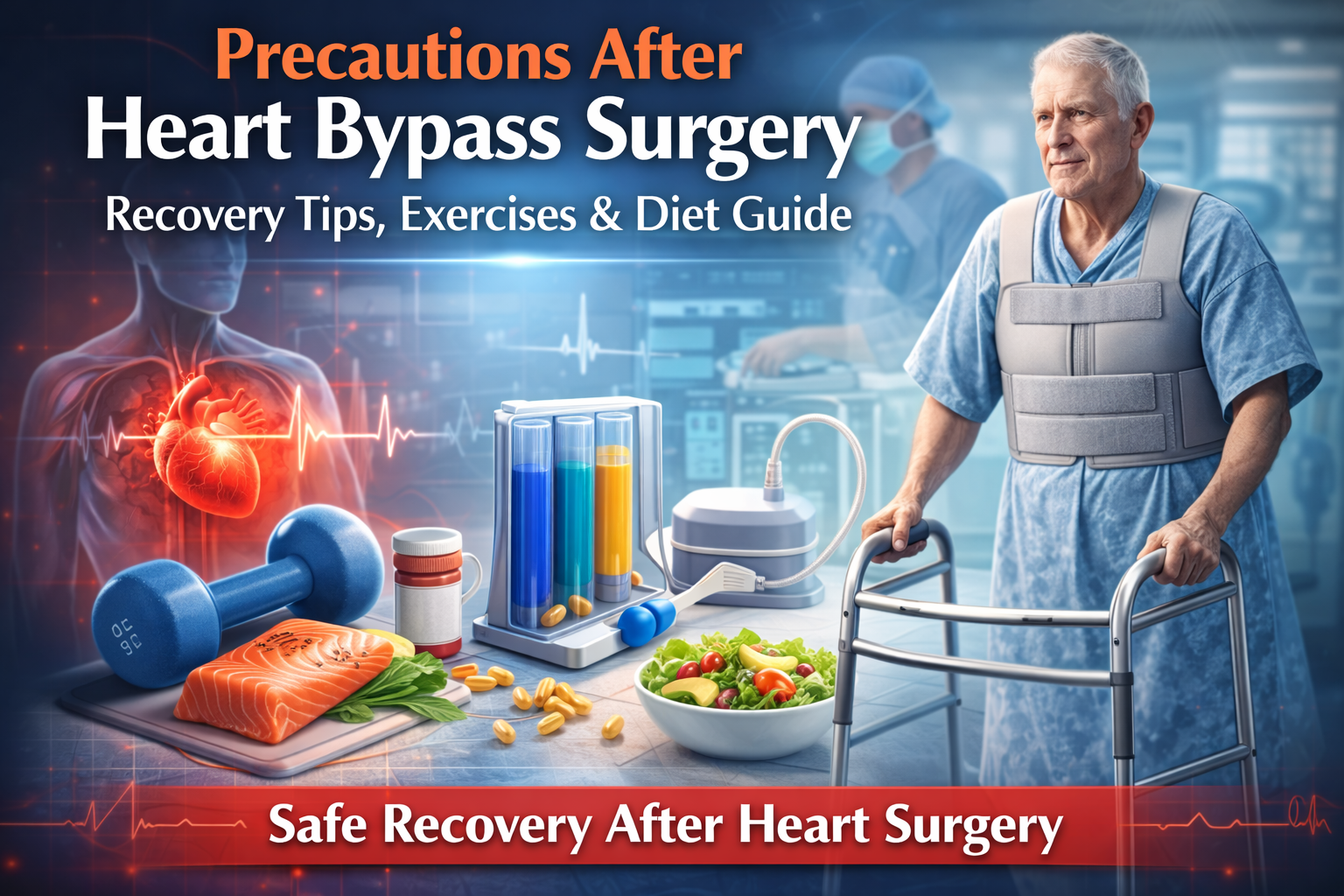
Recovering after heart bypass surgery is a critical phase that requires proper care, lifestyle adjustments, and patience. Patients often worry about what activities are safe, what foods they can eat, and how to avoid complications during recovery.
Following the right precautions after bypass surgery can help speed up healing, prevent complications, and improve overall quality of life.
1. Avoid Heavy Work with the Upper Body
One of the most important instructions for patients after bypass surgery is to avoid putting strain on the upper body. The chest bone (sternum) needs time to heal properly.
- Avoid lifting heavy objects
- Do not push or pull heavy items
- Avoid lifting children or carrying heavy bags
- Limit activities that require arm strength
These precautions are especially important during the first few weeks after surgery.
2. Start Shoulder Exercises After Healing
If patients completely avoid shoulder movement for months, they may develop a condition known as Frozen Shoulder, which causes stiffness and pain.
After the surgical wound heals, gentle shoulder exercises should be started to maintain mobility.
Simple Shoulder Exercise
- Raise your arms slowly
- Move them forward and backward
- Repeat the movement 4–5 times a day
This helps maintain shoulder flexibility and prevents stiffness.
3. Practice Deep Breathing Exercises
Many patients avoid deep breathing because it causes temporary chest discomfort. However, not breathing deeply can cause the lungs to partially collapse, leading to coughing and breathing problems.
To prevent this, doctors recommend using an Incentive Spirometer, a small breathing device often provided in the ICU.
How It Helps
- Encourages deep breathing
- Keeps lungs expanded
- Prevents lung collapse
- Reduces risk of infection
Learn more about Incentive Spirometry after cardiac surgery.
Alternative Exercise: Balloon Blowing
If a spirometer is not available, patients can perform a simple breathing exercise by blowing balloons.
- Blow 40–50 balloons per day
- This helps expand the lungs
- Improves breathing capacity
Regular breathing exercises reduce coughing and help prevent complications.
4. Walking Is Essential for Recovery
Many patients become afraid of movement after surgery and spend most of their time lying down. However, walking is extremely important for recovery.
Benefits of Walking
- Improves blood circulation
- Strengthens the heart
- Prevents blood clots
- Boosts energy levels
Start with short walks and gradually increase the distance as recommended by your doctor.
5. Use a Chest Binder If Recommended
Doctors often recommend a chest binder after bypass surgery, especially for patients who are overweight.
Benefits of a Chest Binder
- Supports the chest bone
- Reduces pain during movement
- Helps stabilize the surgical area
Patients with higher body weight should wear the binder regularly for better chest support.
Patients with normal or low weight may not always need it, especially in hot weather.
6. Maintain a Balanced Diet After Bypass Surgery
One common mistake families make after surgery is placing too many restrictions on the patient’s diet. In many households, every family member starts acting like a doctor and tells the patient not to eat certain foods.
This can reduce appetite and cause weakness.
Healthy Diet Guidelines
- Eat a balanced diet
- Avoid excessive oil and saturated fats
- Limit salt intake but do not eliminate it completely
- Eat moderate portions of all foods
Completely bland food without taste can reduce appetite and cause weakness in recovering patients.
7. Family Support Is Important
Recovery is not just about the patient—it also involves the family. If unhealthy foods are harmful for the patient, they are also harmful for other family members.
Instead of isolating the patient with strict restrictions, the whole family should adopt a healthier lifestyle.
This makes recovery easier and encourages long-term heart health.
Frequently Asked Questions (FAQs)
1. How long does it take to recover after bypass surgery?
Most patients recover within 6 to 12 weeks, but full healing of the chest bone may take around three months.
2. Can I lift heavy objects after bypass surgery?
No. Patients should avoid lifting heavy weights or performing strenuous upper-body activities during early recovery.
3. Why are breathing exercises important after heart surgery?
Breathing exercises help keep the lungs expanded, reduce coughing, and prevent lung complications.
4. Is walking safe after bypass surgery?
Yes. Walking is strongly recommended as it improves circulation and supports heart recovery.
5. What foods should be avoided after bypass surgery?
Patients should limit foods high in saturated fats, excessive salt, and heavily processed foods.
Conclusion
Recovering from heart bypass surgery requires proper precautions, gentle physical activity, breathing exercises, and a balanced diet. Avoid heavy upper-body work, perform breathing exercises regularly, and stay active with walking.
Most importantly, focus on maintaining a healthy lifestyle rather than restricting everything. Balanced habits can help patients recover faster and live a healthier life after heart surgery.
Sources
- American Heart Association – Heart Surgery Recovery
- National Heart, Lung, and Blood Institute – Coronary Artery Bypass Surgery
- Mayo Clinic – Heart Surgery Recovery Guidelines