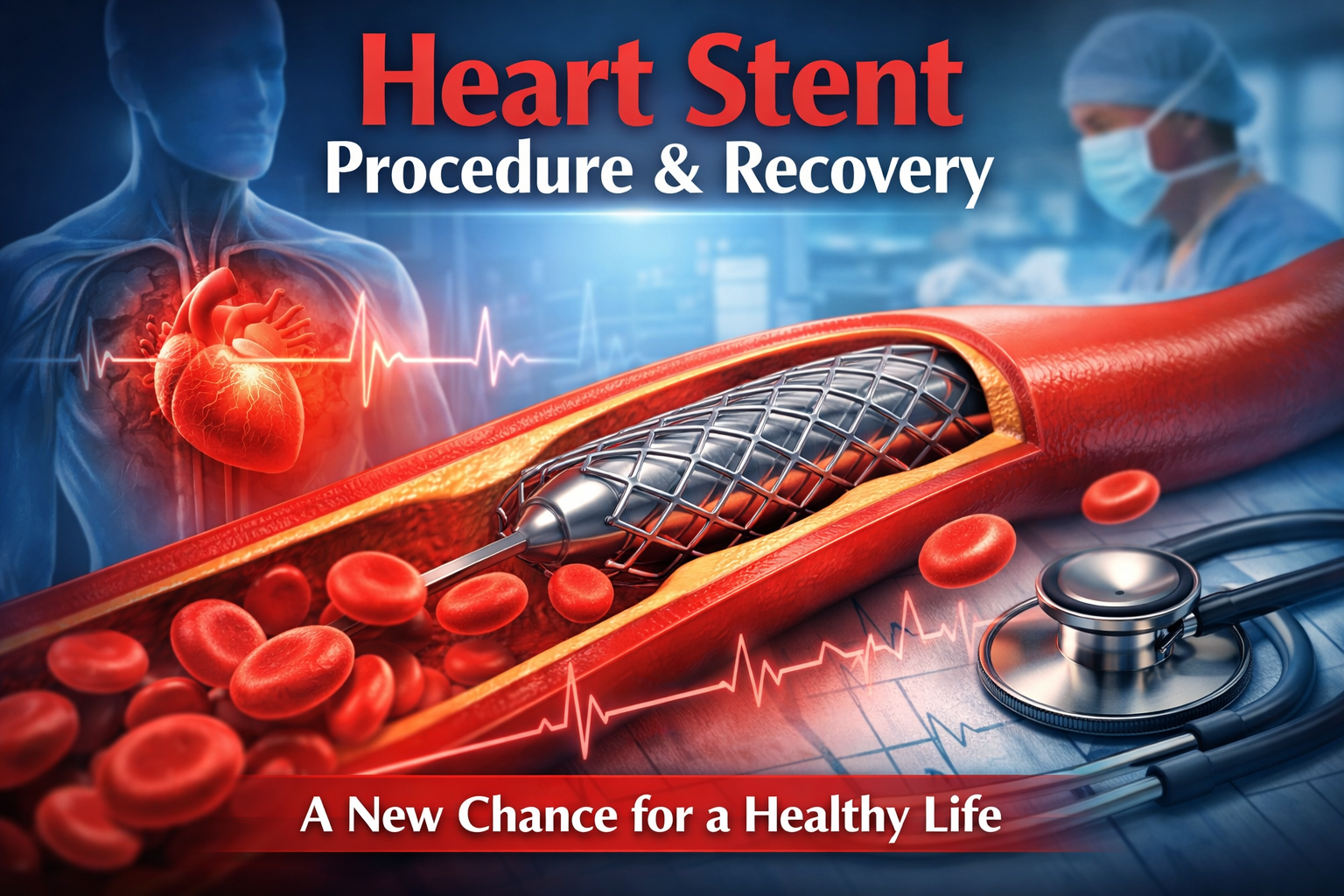
A heart stent procedure is one of the most common treatments used to open blocked coronary arteries and restore proper blood flow to the heart. Millions of patients worldwide undergo this life-saving treatment every year. While the procedure itself is usually quick, understanding recovery and long-term heart care is essential for maintaining a healthy life.
If you or a loved one is preparing for a heart stent or recovering from one, remember that this is not the end of your journey. Instead, it marks the beginning of a stronger and more heart-healthy lifestyle.
What Is a Heart Stent?
A heart stent is a small mesh tube placed inside a blocked artery during a procedure called angioplasty. The stent helps keep the artery open, allowing blood to flow freely to the heart muscle.
Doctors typically recommend stents for patients with:
- Coronary artery disease (CAD)
- Severe artery blockage
- Chest pain (angina)
- Heart attack
Learn more about cardiac stents from the American Heart Association.
Why Is a Stent Procedure Performed?
The primary goal of placing a stent is to improve blood flow to the heart and reduce the risk of serious complications like heart attacks.
Main Benefits of Heart Stents
- Restores normal blood circulation
- Reduces chest pain and discomfort
- Lowers risk of future heart attacks
- Improves overall quality of life
What Happens During a Stent Procedure?
The stent procedure, also called percutaneous coronary intervention (PCI), is minimally invasive and usually takes about 30 to 60 minutes.
Step-by-Step Procedure
- A catheter is inserted into an artery in the wrist or groin.
- The catheter is guided toward the blocked coronary artery.
- A balloon is inflated to widen the artery.
- A stent is placed to keep the artery open.
- The catheter is removed once blood flow is restored.
Read more about coronary angioplasty and stent placement.
Recovery After a Heart Stent
Most patients recover quickly after a stent procedure. Many people go home within 24 hours and return to normal activities within a few days.
Important Recovery Tips
- Take all prescribed medications, especially blood thinners.
- Avoid heavy lifting for several days.
- Follow a heart-healthy diet.
- Attend follow-up doctor appointments.
- Gradually increase physical activity.
For patients who recently had surgery, breathing exercises such as Incentive Spirometry can help improve lung function and recovery.
Lifestyle Changes After a Stent
A stent treats the blockage, but it does not cure heart disease. Long-term lifestyle changes are essential to prevent new blockages.
Healthy Habits for Heart Patients
- Eat a balanced, low-fat diet
- Quit smoking
- Exercise regularly
- Maintain a healthy weight
- Manage stress
- Control blood pressure and cholesterol
The CDC recommends heart-healthy lifestyle habits to reduce cardiovascular risks.
When to Contact Your Doctor
While most stent procedures are successful, you should contact your doctor if you experience:
- Severe chest pain
- Shortness of breath
- Swelling at the catheter site
- Fever or infection symptoms
Early medical attention can prevent serious complications.
Life After a Heart Stent
Many patients worry that life will never feel normal again after a heart procedure. However, the truth is that a stent can give you a new chance at a healthier life.
If you are struggling to breathe freely again or adjusting to lifestyle changes, remember that recovery takes time. With proper care, medication, and healthy habits, most people return to normal activities and enjoy a better quality of life.
Think of the procedure not as an ending, but as the beginning of a stronger, more aware, and more heart-healthy future.
Frequently Asked Questions (FAQs)
1. How long does a heart stent last?
Most stents are designed to remain in the artery permanently. However, maintaining a healthy lifestyle is essential to prevent new blockages.
2. Can arteries get blocked again after a stent?
Yes, although rare, arteries can narrow again. Doctors prescribe medications and lifestyle changes to reduce this risk.
3. Is the stent procedure painful?
The procedure is usually not painful. Patients receive local anesthesia and mild sedation during the treatment.
4. How soon can I return to normal activities?
Most people resume light activities within a few days and return to normal routines within a week, depending on their doctor’s advice.
5. Do I need medication after a stent?
Yes. Doctors usually prescribe blood-thinning medications such as aspirin to prevent clot formation around the stent.
Conclusion
A heart stent procedure is a powerful and life-saving treatment for blocked arteries. With proper recovery, medication, and lifestyle changes, patients can live longer and healthier lives.
If you or someone you care about is preparing for a stent or recovering from one, remember that this is not the end — it is the beginning of a stronger and healthier journey.
Sources
- American Heart Association – Cardiac Stents
- National Heart, Lung, and Blood Institute – Coronary Angioplasty
- Centers for Disease Control and Prevention – Heart Disease Prevention